KALP 2026 took place from February 23 to 26, 2026, with “Pixelated” as its central theme. The standout features of this year’s event were the series of innovative student-crafted installations and the first-ever National-level Design Competition hosted by the Institute.
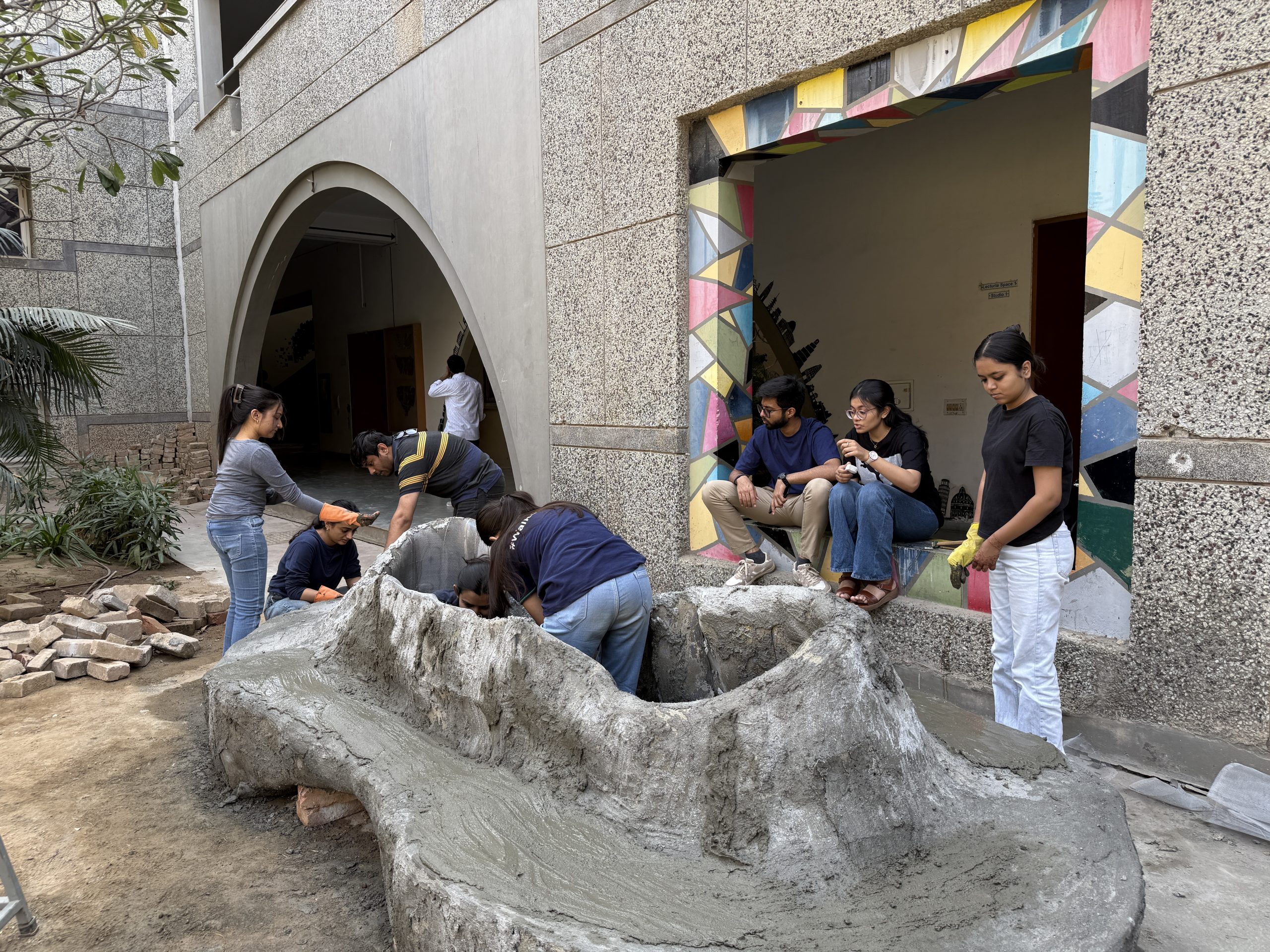
The installations seamlessly merged academic knowledge with hands-on experimentation, providing a dynamic platform for students to explore structure, materials, and technology. These were divided into two categories: Service-based installations and Art-based installations. The service-based installations were faculty-led with 3rd-year participation, featuring a Sample washroom showcasing plumbing and anthropometric details (with fixtures sponsored by Jaquar), Motion sensor-based lights, Acoustic materials, HVAC working models, and Solar lighting. The art-based installations explored various materials following the “Pixelated” theme, including Bamboo seating, Northern lights, a Kinetic installation, a Pixel cloud, and a Puzzle using wooden boards. Notable thematic works also included the Kavitra backdrop (deconstructed narratives), an Auditorium backdrop, Seating using ferro-cement, and Modular furniture from waste.
The National-level Design Competition served as a major highlight, drawing participation from students all over India to compete for a prize pool of ₹1,00,000. KALP 2026 coordinators Prof. Akshay Kaleshwarwar and Prof. Shivanjali Mohite remarked: “Participating in national design competitions is essential for students as it pushes them beyond the classroom, testing their ability to solve real-world modular problems under professional scrutiny. Simultaneously, the service-based installations provide a rare platform for a ‘nuts-and-bolts’ understanding of building systems, while art installations allow them to deconstruct design theories into tactile reality. Together, these hands-on experiences are invaluable in bridging the gap between theoretical knowledge and practical application, preparing students to become innovative and thoughtful designers.”